
Does my child have buck teeth?
Buck teeth is the everyday name for upper front teeth that sit well ahead of the lower ones. Orthodontists call it an increased overjet. Around one child in five has some degree of it, and it is one of the most common reasons a family comes to see us. Here is how to check at home, why it happens, why we like to see it early, and what treatment looks like at each age.
Free first step, no referral needed. Choose Newmarket or Albany and switch at any time.
Reviewed by Dr Shaz MacAvoy, Specialist Orthodontist. Doctor of Clinical Dentistry (Orthodontics), registered with the Dental Council of New Zealand.
What buck teeth are, and why they happen
The front teeth are rarely the whole story. Most of the time it is the jaws behind them.
A lower jaw growing a little behind
The most common cause. The upper teeth are where they should be, but the lower jaw sits back, so the top teeth look prominent. It runs in families and it is the pattern that responds best to treatment during growth.
A habit that pushes the teeth forward
Thumb, finger or dummy sucking past about age 5 tips the upper front teeth out and can hold the lower ones back. Stopping the habit early often lets a mild overjet settle by itself.
Teeth that have simply tipped
Sometimes the jaws match well and the front teeth have just flared forward, often with a gap between them. This is the simplest version to correct with braces or clear aligners.
A two minute self check at home
Good light, and ask your child to bite their back teeth together without pushing the jaw forward. Then look from the side.
A fingertip that fits, lips that strain to close, or a chipped front tooth: any one of these is worth a free look. The exact number only matters to us. Up to about 3 mm of overjet is normal; beyond about 6 mm is the point where we start to think about protecting the teeth.
Why we like to see buck teeth early
Prominent front teeth are not dangerous, but two things make an early look worthwhile.
The teeth are more likely to get knocked
Front teeth that sit well forward take the hit in a fall or a ball to the face. Children with a large overjet chip or break a front tooth roughly twice as often as other children. Bringing the teeth back removes that risk for good.
Growth can do part of the work
Where the lower jaw sits back, a removable appliance worn around the growth spurt encourages it forward. That window closes as growth slows, which is why timing matters more here than for crooked teeth.
Habits are easier to stop young
A thumb or dummy habit is the one cause that can fix itself. Stopped before the adult front teeth are settled, a mild overjet often closes on its own. We have gentle ways to help if the habit will not budge.
Lips that will not close
Straining to close the lips at rest, or a lower lip that tucks behind the top teeth, both push the front teeth further out over time. Correcting the bite lets the lips rest together naturally.
Confidence at school
Prominent front teeth are one of the most teased features in a playground, and one of the most common reasons a child asks for braces themselves. That is a good enough reason on its own to have a look.
A simpler plan later
An early look does not always mean early treatment. Most children with buck teeth are simply watched and treated once, in the early teens. Seeing them early just means we choose the timing rather than the calendar choosing it.
The right age to correct buck teeth
Two chances to help, and for most children one course of treatment in the early teens is enough.
Age 7 to 10: check, stop habits, protect
The first look is around 7 to 8. If a sucking habit is holding the teeth out, that is addressed now. Where the teeth are very prominent and being knocked, a short early phase can bring them back for protection.
Age 10 to 14: guiding growth
Around the growth spurt a removable appliance can encourage a small lower jaw forward, then braces or clear aligners finish the bite. This is when most buck teeth treatment starts, and it usually takes 12 to 24 months.
Age 15 and up: still very treatable
With growth slowing, the teeth are moved rather than the jaw guided, often with small elastics. Braces and aligners correct an overjet well right through the teens. Older teens often choose clear braces or aligners.
Research on early versus later treatment shows the final result is similar either way. The reasons to treat earlier are protecting teeth that are being knocked and a child who is unhappy about them. We tell you which applies. See thumb sucking and the best age for braces.
What it looks like when treated
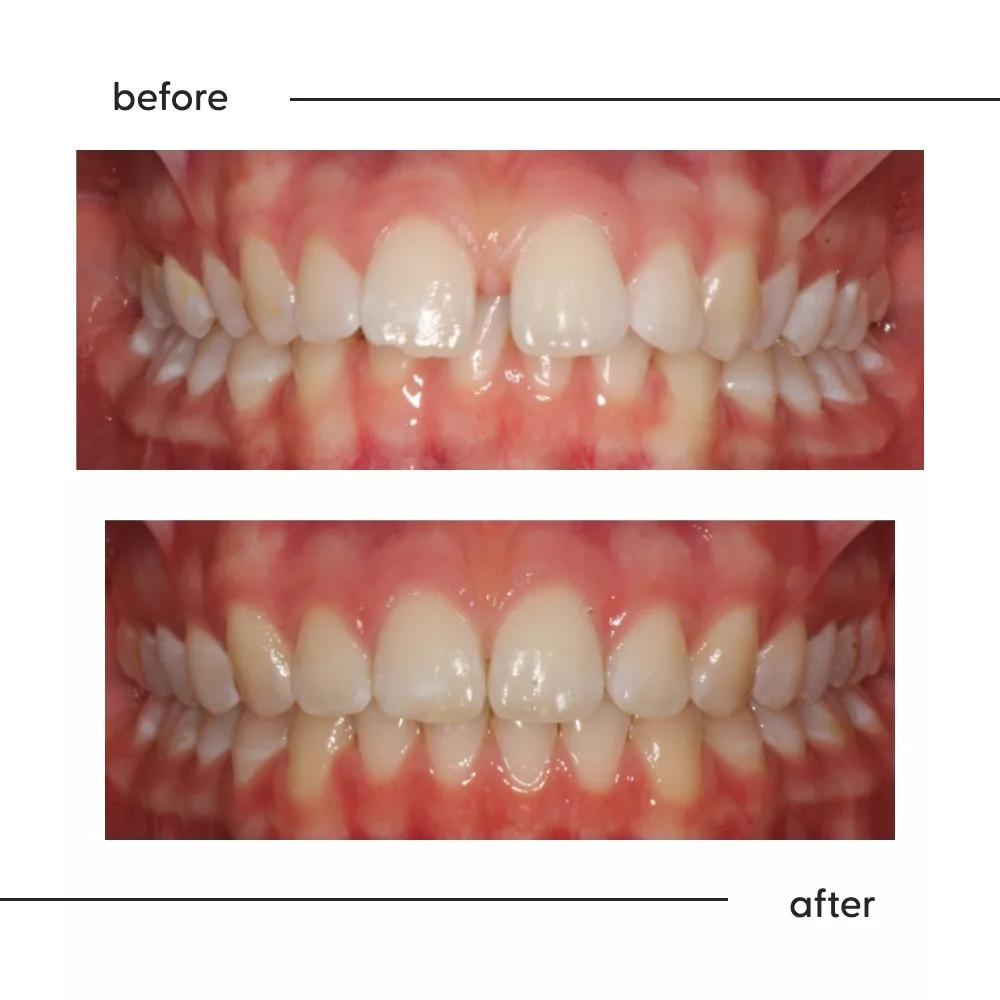
Real young Milk Orthodontics patients, treated by a specialist and shared with their permission.
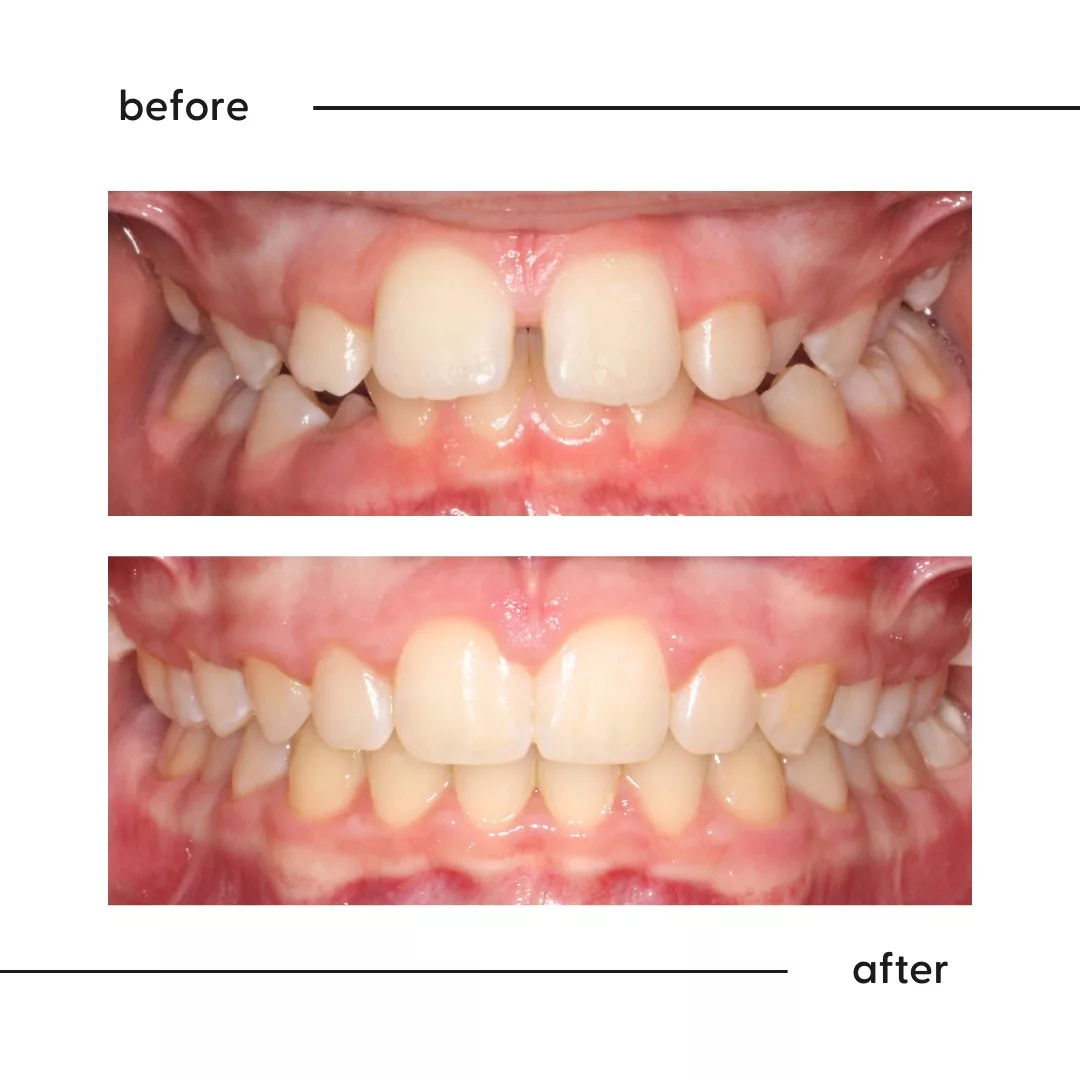
More on how we treat buck teeth, all the conditions we treat and more before and after results.
What it costs, and what is free
The first visit is a free Smile Assessment. If treatment is worthwhile, comprehensive braces or aligners for children and teens are from $9,900 all-inclusive, most cases around $10,400. A short early phase to protect very prominent teeth starts from $4,500. Interest-free plans spread the cost over treatment, and there is a family discount for siblings.
Answered honestly
What are buck teeth?
Upper front teeth that sit well ahead of the lower ones, which orthodontists call an increased overjet. Up to about 3 mm is normal. Beyond about 6 mm the teeth are prominent enough to be at risk of knocks, and that is when we start talking about treatment.
How do I tell if my child has buck teeth?
Ask your child to bite their back teeth together and look from the side. If the top front teeth sit well ahead of the bottom ones, a fingertip fits between them, or the lips strain to close at rest, the overjet is large enough for a free specialist look.
What causes buck teeth in children?
Most often a lower jaw that is growing a little behind the upper one, which runs in families. Thumb, finger or dummy sucking past about age 5 can tip the front teeth forward. Sometimes the jaws match and the teeth have simply flared.
Will my child grow out of buck teeth?
A mild overjet caused by a sucking habit can settle once the habit stops early enough. An overjet caused by jaw growth does not go away on its own and often gets a little worse as the face grows. A free assessment tells you which you are looking at.
Why do buck teeth get chipped?
Because they sit forward, they are the first thing to hit the ground, a ball or another child. Children with a large overjet break a front tooth about twice as often as other children. Bringing the teeth back into line removes that risk, and a mouthguard helps in the meantime.
What is the best age to fix buck teeth?
Most children have one course of treatment in the early teens, around 10 to 14, when growth can help guide the lower jaw forward. Earlier treatment is for very prominent teeth that are being knocked, or a child who is unhappy about them. The first look is around 7 to 8.
How are buck teeth fixed?
Depending on the cause: a removable appliance worn around the growth spurt to encourage the lower jaw forward, then braces or clear aligners to bring the front teeth back and close the bite, often with small elastics. A sucking habit is addressed first. Treatment usually takes 12 to 24 months.
How much does it cost to fix buck teeth in NZ?
At Milk, comprehensive braces or aligners for children and teens are from $9,900 all-inclusive, most cases around $10,400. A short early phase starts from $4,500. The Smile Assessment is free, and the written plan with an exact quote follows the $390 New Patient Consultation.
Front teeth sitting forward? Let us take a look
A free 20 minute Smile Assessment with our Treatment Coordinator at Newmarket or Albany. No referral, no obligation, and if the answer is wait, we will say so.
More self checks: does my child have an overbite, does my child have an underbite, does my child have a crossbite and does my child have an open bite. Or start with the ten signs your child may need braces.