
Thumb sucking and your child's teeth
Most children suck a thumb or dummy for comfort, and most stop on their own between two and four. If your child stops by around age three to four, any effect on the teeth usually settles by itself. It is worth stepping in when the habit carries on past about age four to five and the adult teeth are on the way, because ongoing sucking can push the front teeth forward, hold the bite open and narrow the upper jaw. The reassuring part: it is very treatable, gentle help works best, and your child's first Smile Assessment is free.
Specialist-planned. No referral needed.
Reviewed by Dr Shaz MacAvoy, Specialist Orthodontist. Doctor of Clinical Dentistry (Orthodontics), registered with the Dental Council of New Zealand.
What thumb sucking can do to the teeth
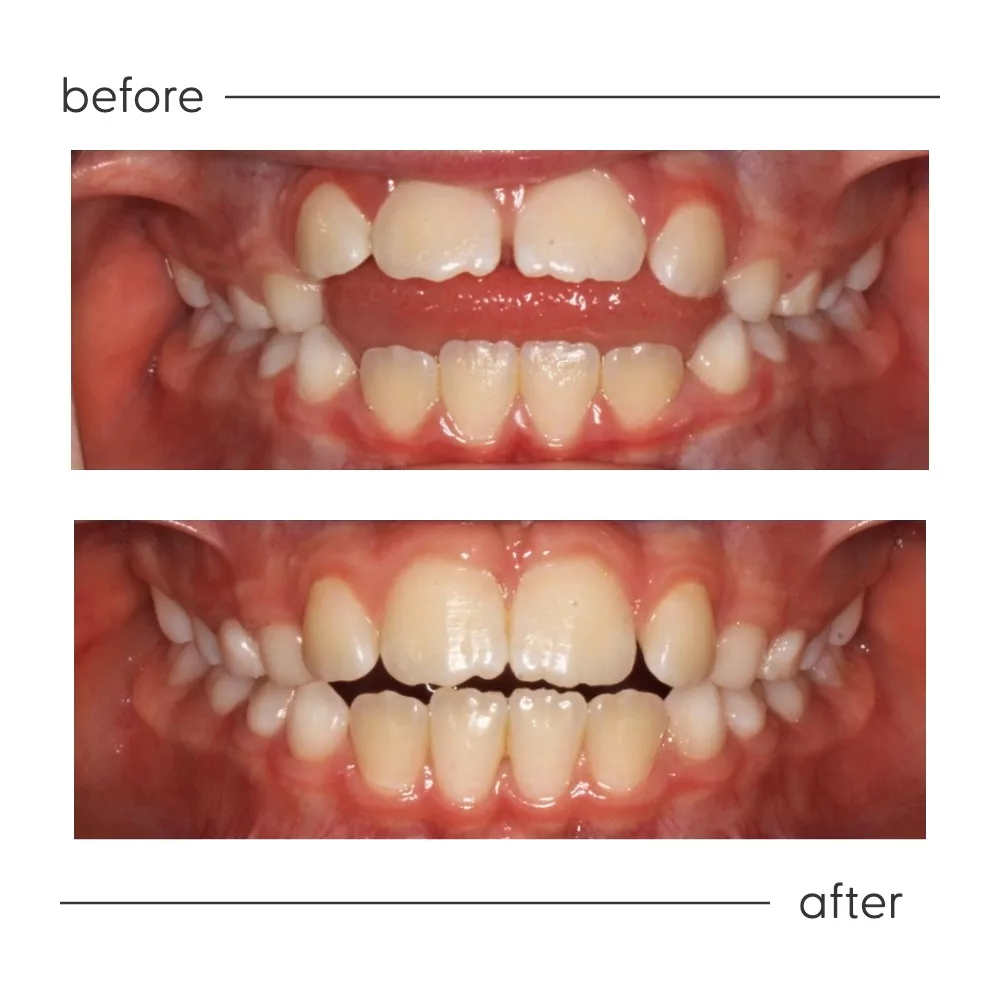
Strong, frequent sucking that continues once the adult teeth arrive can gradually change the way the teeth and jaws grow. These are the three we see most, and each is treatable.
An open bite
The front teeth are held apart and do not meet when the back teeth close. Learn more on our open bite page, or check at home with the open bite self check.
Front teeth that stick out
The top front teeth are pushed forward, increasing the overjet. See our buck teeth page.
A narrow upper jaw
The upper arch narrows so the back teeth bite the wrong way, a crossbite. See our crossbite page.
Timing is everything, and it is on your side
Before about age four, there is usually no need to worry, so try not to make it a battle. From around age four to five, as the adult front teeth begin to appear, it is worth helping your child ease off the habit. If it has already affected the bite, the best time for a specialist to look is around age seven, when we can guide the growing jaws while they are still developing.
Helping your child stop, kindly
We always start with the gentlest approach that works. Shaming never helps, and it usually makes the habit stick. Here is how we work through it together.
Positive encouragement
Praise thumb-free time, use a simple reward chart, and cover the trigger moments like tiredness or boredom with a cuddle, a toy or a story. Most children respond beautifully to this alone.
Gentle reminders
If a little more help is needed, soft reminders such as a glove or a plaster at night make the thumb less automatic, especially during sleep, without any drama.
A small habit appliance
For a stubborn habit that is affecting the teeth, a comfortable fixed reminder behind the top teeth quietly interrupts the suck. It is not a punishment, and most children stop within a few months.
If the bite has already changed, we can correct the teeth and jaws with a short course of early treatment. Everything is planned by a specialist orthodontist, at your child's pace.
Thumb sucking, answered
At what age should a child stop sucking their thumb?
Thumb and dummy sucking is normal and comforting for babies and toddlers, and most children stop on their own between two and four. If your child stops by around age three to four, any effect on the teeth usually settles by itself. It is worth acting if the habit carries on past about age four to five, once the adult teeth are on the way.
Can thumb sucking damage my child's teeth?
Gentle, occasional sucking rarely causes lasting change. Strong, frequent sucking that continues once the adult teeth arrive can push the top front teeth forward, hold the front teeth apart so they do not meet (an open bite), and narrow the upper jaw so the back teeth bite the wrong way (a crossbite). The good news is these are treatable, especially when caught early.
Will my child's teeth fix themselves once they stop?
Often, yes, if the habit stops before the adult front teeth are fully in. Baby teeth and early bites frequently improve on their own once the sucking pressure is gone. If the adult teeth are already affected, a short course of orthodontic treatment can correct the bite. A specialist assessment tells you which situation you are in.
How can I get my child to stop sucking their thumb?
Kind and positive works far better than telling off. Praise thumb-free time, use a simple reward chart, and gently cover the trigger moments like tiredness or boredom with a cuddle, a toy or a story. Reminders such as a soft glove or plaster at night can help. If the habit is stubborn, a specialist can fit a small, comfortable reminder appliance.
Do you use an appliance to stop thumb sucking?
Only if gentle, positive methods have not worked and the habit is affecting the teeth. A habit reminder appliance is a small fixed device behind the top teeth that quietly interrupts the suck so it is no longer satisfying. It is comfortable, not a punishment, and most children stop within a few months. We always start with the kindest approach first.
Is it too late if my child is older and still sucking their thumb?
It is never too late to help. Even if the habit has already affected the bite, we can stop the habit and correct the teeth, and treatment tends to be simpler the sooner it starts. Book a free Smile Assessment and we will give you a clear, no-pressure plan. You can also explore our children's orthodontics and conditions we treat.
Worried about the thumb habit? Let us take a look
Book a complimentary Smile Assessment and a specialist will check your child's teeth and bite and give you a kind, honest plan. In the clinic, no obligation and no referral needed.