
Impacted canines in Aucklandguided gently into your smile
When a canine stays caught in the gum or bone, it can often be coaxed into its proper place rather than lost. Dr Shaz MacAvoy has guided many canines into the smile line.
An early check can catch a canine going off course before it causes trouble.
A canine that has not come through
An impacted canine is a canine tooth, most often an upper one, that does not erupt into its normal position and instead stays caught in the gum or bone.
Canines are cornerstone teeth. They sit at the corners of your smile, help balance your bite and give the smile its natural, rounded shape. After wisdom teeth, canines are the most commonly impacted teeth, so this is a situation specialist orthodontists see and manage often.
Because these teeth do so much work for a healthy bite and a natural looking smile, it is well worth guiding a stuck canine into place rather than removing it. For a wider view of teeth that fail to erupt normally, our impacted teeth overview explains the general approach in more detail.
Why an impacted canine deserves attention
Protects neighbours
A canine stuck in the wrong place can press on and damage the roots of the teeth beside it. Occasionally it can also form a cyst.
Gaps and baby teeth
It can leave a gap in the smile or a retained baby canine that lingers well past the age it should have been replaced.
Bite and appearance
Left alone, the tooth can affect how your bite meets and how your smile looks. Early detection keeps treatment simpler.
Finding a canine before it goes off course
Upper canines usually come through around age 11 to 13. A check in the right window can catch one heading the wrong way.
At Milk, a specialist looks at the path each canine is taking. A panoramic x-ray shows the position and angle of the developing teeth, and sometimes a 3D scan, called a CBCT, is used to pinpoint exactly where a canine sits in relation to the roots around it.
Because canines can drift quietly for a year or two before anyone notices, an early check around age 10 to 13 is genuinely valuable. This kind of monitoring sits at the heart of children's orthodontics and early checks, where the aim is to spot problems while they are still easy to steer.
How an impacted canine is guided into place
The right approach depends on how the canine is positioned and how early it is found.
Sometimes the simplest step works. Removing the baby canine at the right time can encourage the adult canine to redirect itself and come through on its own. This gentle, interceptive step is most effective when a canine is only mildly off course and is caught early.
When a canine is truly impacted, the usual approach is a team one. A specialist oral surgeon gently exposes the tooth and bonds a small bracket and fine gold chain to it. Dr Shaz then uses braces that guide the tooth to create the space needed and slowly, gently draw the canine down into its place in the arch over several months. Space is often prepared with braces first, so the tooth has somewhere to arrive.
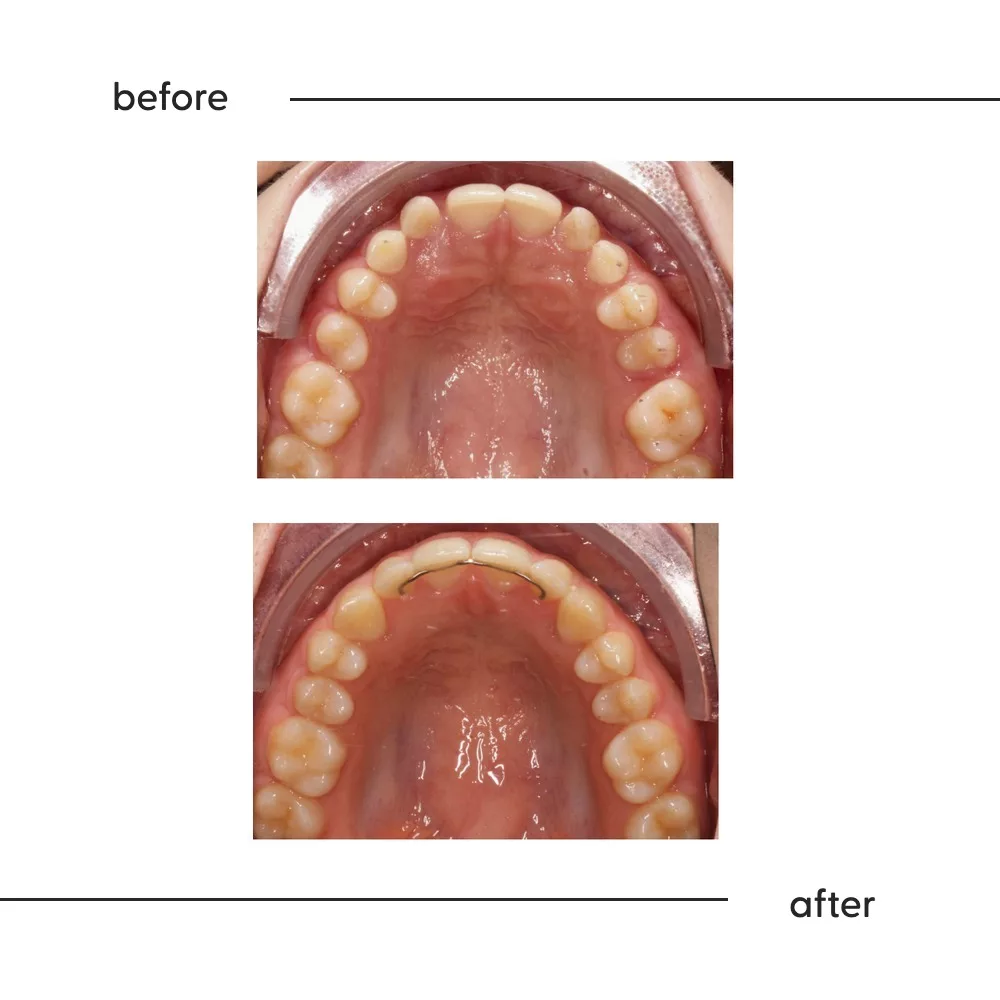
This is a gradual, carefully planned process rather than a single procedure. Milk's before and after gallery includes a case where an impacted canine was brought through with braces and settled neatly into the smile line, and Dr Shaz has guided many canines into position over the years.
Timing that works in your favour
- Interception is ideal in the early teens, while a canine can still be nudged onto a better path.
- Impacted canines can still be treated in older teenagers and adults, though treatment usually takes a little longer.
- The process is gradual, planned and comfortable, with the tooth moved slowly and steadily.
- A personal assessment is the best way to understand your own or your child's situation.
Common questions about impacted canines
What is an impacted canine?
It is a canine tooth, most often an upper one, that does not come through into its normal position and stays caught in the gum or bone. After wisdom teeth, canines are the most commonly impacted teeth.
Why not simply remove an impacted canine?
Canines are cornerstone teeth that support a balanced bite and a natural looking smile. Because they do so much, it is usually well worth guiding one into place rather than losing it. Dr Shaz can talk through the options at your assessment.
How is an impacted canine detected?
A specialist checks the tooth's path with a panoramic x-ray, and sometimes a 3D scan called a CBCT to pinpoint exactly where it sits. An early check around age 10 to 13 can catch a canine going off course.
How is an impacted canine treated?
Sometimes removing the baby canine at the right time encourages the adult tooth to redirect itself. When a canine is truly impacted, a specialist oral surgeon exposes it and bonds a small bracket and gold chain, then Dr Shaz uses braces to guide it gently into place over several months.
Can adults have an impacted canine treated?
Yes. Interception is ideal in the early teens, but impacted canines can still be treated in older teenagers and adults. Treatment usually takes a little longer, and the process remains gradual and planned.
Does guiding a canine into place hurt?
The tooth is moved slowly and gently over several months, so the process is designed to be comfortable and manageable. Your care is planned step by step from the start.
Let's check that canine early
Book a complimentary Smile Assessment and we will look at how your or your child's canines are coming through, and what, if anything, is worth doing.