
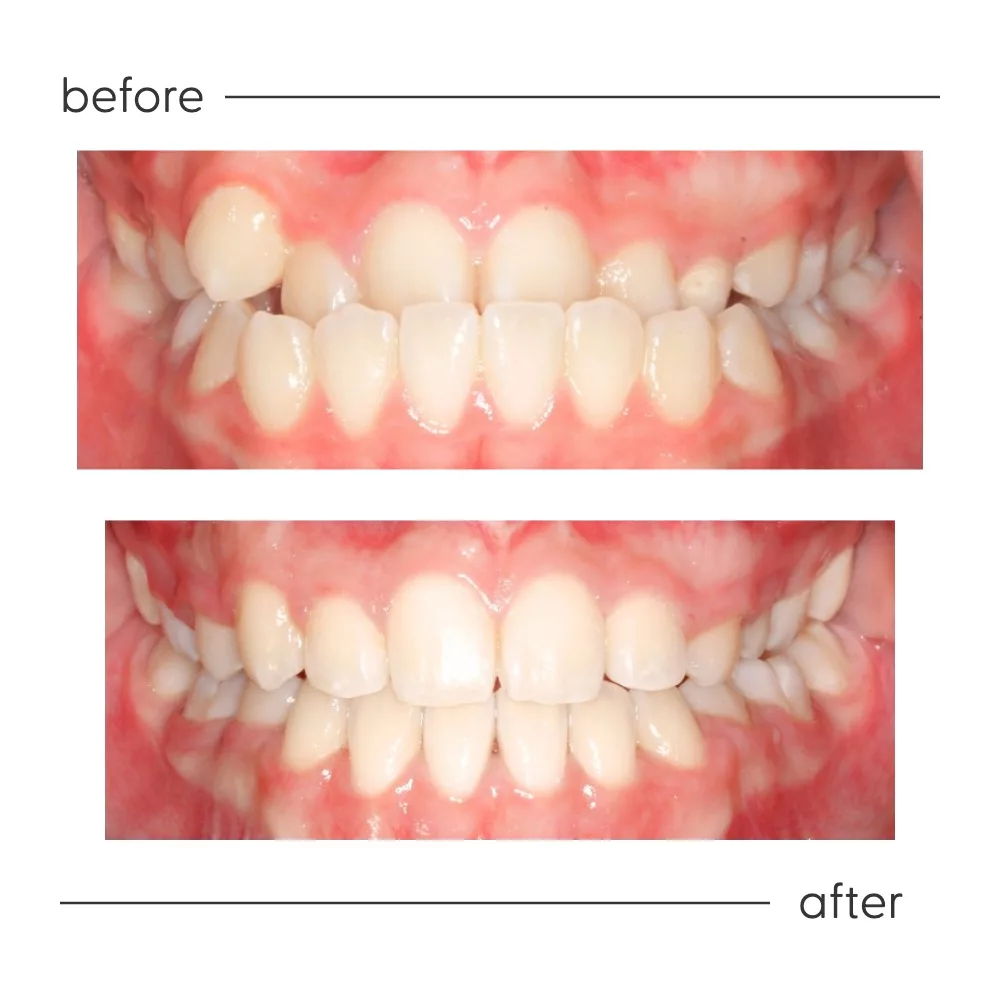
Does my child have an underbite?
An underbite is when the lower front teeth sit in front of the upper ones with the back teeth together. It is less common than an overbite, it usually runs in families, and it is the one bite problem where seeing a specialist early makes the biggest difference. Here is how to check at home, what causes it, and why the age of the first visit matters so much.
Free first step, no referral needed. Choose Newmarket or Albany and switch at any time.
Reviewed by Dr Shaz MacAvoy, Specialist Orthodontist. Doctor of Clinical Dentistry (Orthodontics), registered with the Dental Council of New Zealand.
What an underbite is, and where it comes from
Three patterns produce the same look from the front. They need different treatment, and only a specialist assessment tells them apart.
An upper jaw that is a little small or set back
The most common pattern in children. The lower jaw is normal but the upper one has not come forward enough, so the lower teeth end up in front. This is the version early treatment helps most, because the upper jaw can still be encouraged forward before about age 10.
A lower jaw growing further forward
The lower jaw is longer or growing ahead of the upper one. It often runs in families, and because the lower jaw keeps growing into the late teens, especially in boys, we watch it closely and time treatment carefully.
A bite that slides forward
Sometimes the jaws match, but a tooth in the wrong place makes the lower jaw slide forward to close. Fixing the tooth lets the bite settle back. This is the simplest version, and it is also why early correction matters, before the slide becomes the way the jaw grows.
A two minute self check at home
Ask your child to bite their back teeth together naturally, not to push the jaw forward or back. Then lift the lips and look from the front and the side.
Any yes is worth a free look, and the younger the better. Unlike most bite problems, we would rather see an underbite at 6 or 7 than at 12. Read when a child should first see an orthodontist.
Why an underbite is the bite to see early
For most crooked teeth, waiting for the adult teeth is the right call. An underbite is the exception.
The upper jaw responds while it is still soft
Before about age 10 the joins in the upper jaw are still open, so a widening appliance and a facemask worn at night can bring the upper jaw forward. After that window the same result takes much more.
It does not improve on its own
Because the lower jaw keeps growing longer than the upper one, an underbite left alone tends to get more pronounced through the teens, not less.
Early correction protects the teeth
Teeth biting the wrong way round wear each other down and can push the lower front teeth outward, thinning the gum around them. A bite that slides forward strains the jaw joints.
It changes the face
A prominent chin and a flat mid-face become more noticeable with growth. Early treatment during childhood is the best chance to influence that rather than only moving the teeth later.
Chewing and speech
Front teeth that cannot meet make biting into food awkward, and some children develop a lisp. Both improve once the teeth meet properly.
It can avoid bigger treatment later
Some severe underbites that finish growing untreated can only be fully corrected as an adult with braces and jaw surgery. Early treatment reduces the number of children who end up there, which is the best reason of all to look now.
The right age to act on an underbite
Earlier than for anything else we treat. The first assessment is free at any age.
Age 6 to 10: the window that matters most
If the upper jaw is set back, this is when it can be brought forward with an expander and a facemask worn at night for 6 to 12 months. A bite that slides forward is corrected now too, before growth follows it. We do not treat every underbite this young, but we want to see every one.
Age 10 to 14: braces, and watching growth
Once the adult teeth are through, braces or clear aligners correct the teeth, often with elastics. Because the lower jaw is still growing we keep checking until growth settles, and we say so honestly at the start.
Age 15 and up: finishing, and the honest conversation
Mild and moderate underbites are corrected with braces or aligners once growth is nearly done. For the small number of severe cases, the complete correction is braces combined with jaw surgery as a young adult, and we explain that clearly rather than promise what braces alone cannot do.
An early phase and later braces are quoted together at the start if both are likely. See palatal expanders and the best age for braces.
What it looks like when treated
Real young Milk Orthodontics patients, treated by a specialist and shared with their permission.
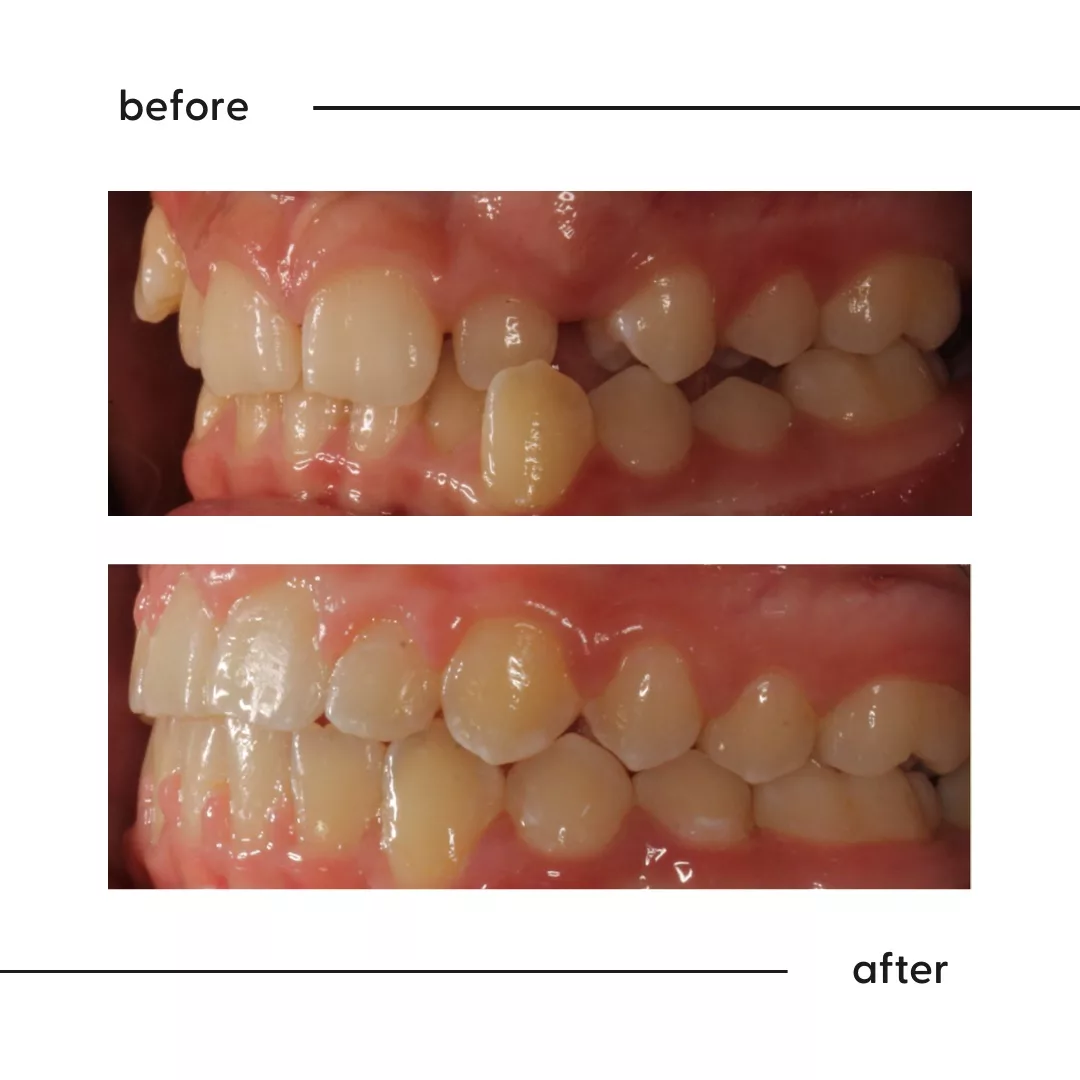
More on how we treat an underbite, all the conditions we treat and more before and after results. Why a corrected underbite can return as the lower jaw grows, with the research: why teeth can move after braces.
What it costs, and what is free
The first visit is a free Smile Assessment. Early treatment to bring the upper jaw forward starts from $4,500. Comprehensive braces or aligners for children and teens are from $9,900 all-inclusive, most cases around $10,400. Interest-free plans spread the cost over treatment, and there is a family discount for siblings.
Answered honestly
What is an underbite?
When the lower front teeth sit in front of the upper front teeth with the back teeth together. Orthodontists call it a Class III bite. It can come from an upper jaw that is a little set back, a lower jaw growing further forward, or a bite that slides forward to fit the teeth together.
How do I know if my child has an underbite?
Ask your child to bite their back teeth together naturally and lift their lips. If the lower front teeth are in front of the upper ones, or edge to edge, or the jaw slides forward to close, that is worth a free specialist look, and the younger the better.
At what age should an underbite be treated?
The first look should be as soon as you notice it, ideally by 6 or 7. If the upper jaw is set back, treatment to bring it forward works best before about age 10. Not every underbite is treated that young, but every one should be seen that young.
Will my child grow out of an underbite?
No. Because the lower jaw keeps growing longer than the upper one, especially in boys into the late teens, an underbite left alone tends to become more pronounced, not less. The one exception is a bite that slides forward because of a single misplaced tooth, which settles once the tooth is corrected.
How is an underbite treated in a child?
If the upper jaw is set back, a widening appliance plus a facemask worn at night for 6 to 12 months brings it forward. A bite that slides forward is corrected by moving the tooth that causes it. Later, braces or clear aligners with elastics finish the bite once the adult teeth are through.
Does an underbite always need jaw surgery?
No. Most underbites in children are corrected with early treatment, braces or aligners, or a combination. Surgery is for the small number of severe cases that finish growing with a large jaw difference, and it is done as a young adult. Early treatment reduces the number of children who need it.
Is an underbite hereditary?
Often, yes. A strong lower jaw runs in families, and if a parent or grandparent had an underbite it is worth having a child checked early even before anything is obvious. Growth patterns can be predicted much better than they can be changed.
How much does underbite treatment cost for a child in NZ?
At Milk, early treatment to bring the upper jaw forward starts from $4,500. Comprehensive braces or aligners for children and teens are from $9,900 all-inclusive, most cases around $10,400. The Smile Assessment is free, and the written plan with an exact quote follows the $390 New Patient Consultation.
Lower teeth in front? See us early
A free 20 minute Smile Assessment with our Treatment Coordinator at Newmarket or Albany. No referral, no obligation, and if the answer is wait, we will say so.
More self checks: does my child have an overbite, does my child have buck teeth, does my child have a crossbite and does my child have an open bite. Or start with the ten signs your child may need braces.