
Does mewing work?
No. Resting your tongue on the roof of your mouth is a normal, healthy thing to do, and it does not reshape a jawline. No study has ever shown mewing changes jaws, cheekbones or teeth, and the American Association of Orthodontists has said so. The photos that look convincing are a year of growth and a tilted chin. Forcing it, as a lot of teenagers do, can move teeth and open the bite. Here is what the evidence says, what the risk is, and what actually changes a jaw in the teens.
Free first step, no referral needed. Choose Newmarket or Albany and switch at any time.
Reviewed by Dr Shaz MacAvoy, Specialist Orthodontist. Doctor of Clinical Dentistry (Orthodontics), registered with the Dental Council of New Zealand.
What mewing claims, and what the research found
The claim
Rest, or press, the tongue against the roof of the mouth, keep the lips closed and the teeth lightly together, and over months the jaw grows forward, the face gets longer and sharper, and the cheekbones lift. Videos show a year apart and credit the tongue.
The evidence
There is none. No peer-reviewed study shows mewing changes the jaw, the cheekbones or the teeth in anyone. The American Association of Orthodontists reviewed the research and said so plainly. What the photos show is growth, posture and lighting.
Where the idea comes from
Orthodontists do care about tongue posture and nasal breathing, because a low tongue and an open mouth go with a narrow upper jaw in a growing child. Mewing took that real observation and turned it into a claim it cannot support.
Six things that are true
The short version, for anyone who has watched the videos.
We wrote about mewing and the other trends in TikTok teeth trends: what Auckland parents need to know.
Why forcing it is a risk at 13, 14 or 15
Teeth move in response to steady force. That is how braces work, and it is why an unplanned force is a problem.
Front teeth pushed forward or apart
Steady tongue pressure against the upper front teeth tips them outward and can open a gap. The same force that mewing hopes will change a jaw quietly changes the teeth instead.
An open bite at the front
Pushing the tongue forward between the teeth for hours a day can hold the front teeth apart so they no longer meet. An open bite is one of the harder things to correct, and the habit has to stop before it will stay corrected.
A strained jaw joint
Holding the lower jaw forward or the teeth clenched to "set" the jaw loads the jaw joints and the muscles. Clicking, aching and headaches follow, and none of it is growth.
Speech changes
A tongue held in an unnatural position for months can change how sounds are made. It usually settles when the habit stops, but it is a sign the force was real.
Missing the real window
The years mewing is popular, 12 to 16, are the years jaw growth can genuinely be guided by an orthodontist. Spending them on a tongue exercise instead of a free assessment is the cost that matters.
Comparing yourself with a filter
Most before and after jawlines online are a tilt of the head, a light from above and a tightened jaw. Measuring your own face against them is a bad deal for anyone, and worse at 14.
What actually changes a jaw in the teens
Growth, and orthodontics timed to it. All planned from records, none of it from a mirror.
Guiding jaw growth
Where the lower jaw sits behind the upper one, a functional appliance worn around the growth spurt, usually 11 to 14, can encourage it forward. It works because it holds the jaw in a new position for months while growth happens, which a tongue cannot do.
Widening the upper jaw
A narrow upper jaw is widened with an expander while the join in the middle is still soft. That broadens the smile, makes room for the teeth and the tongue, and can make nasal breathing easier. It is the closest real thing to what mewing claims.
Setting the teeth and the bite
Braces or clear aligners, 12 to 24 months, change where the lips rest and how the chin reads in profile far more than most teenagers expect. Bringing back prominent front teeth or closing an open bite changes a face. Planned, measured, and reversible if it is stopped.
The timing matters: read braces at 12, 13 or 14 and is 15, 16 or 17 too late. Worried about a specific bite? Try the self checks for an overbite, buck teeth or an underbite.
What a planned change looks like
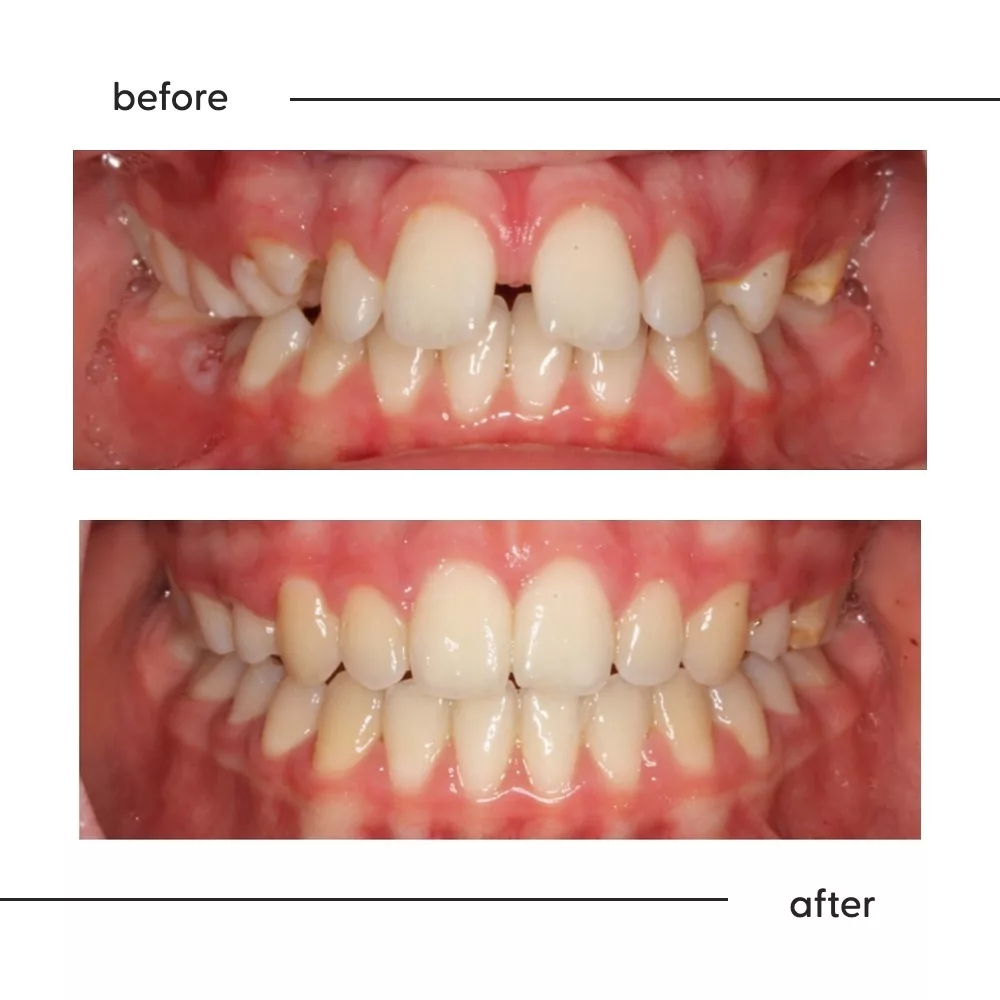
Real Milk Orthodontics teenagers, treated by a specialist and shared with their permission.
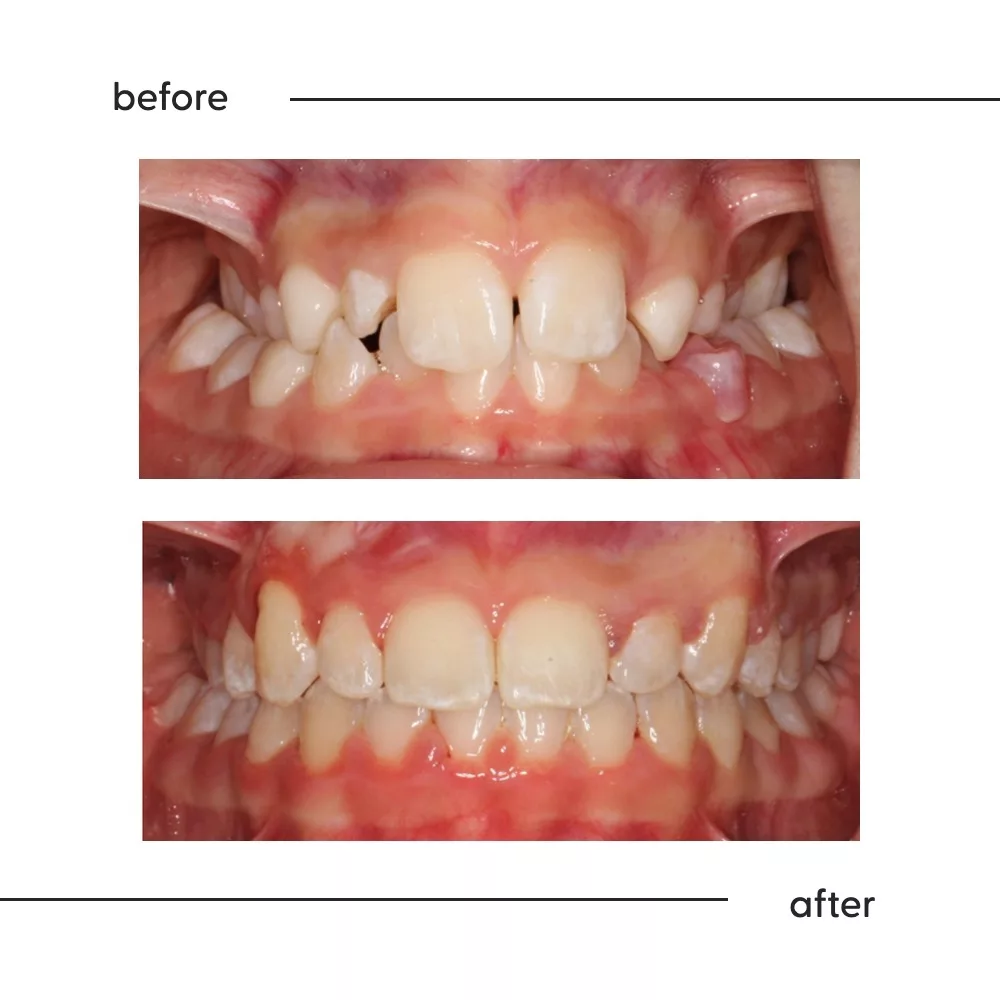
More before and after results, and the guides for teenagers and parents.
What it costs, and what is free
The first visit is a free Smile Assessment. If treatment is worthwhile, comprehensive braces or aligners for teens are from $9,900 all-inclusive, most cases around $10,400. Growth guidance in the early teens starts from $4,500. Interest-free plans spread the cost over treatment, and there is a family discount for siblings.
Answered honestly
Does mewing work?
No, not in the way the videos claim. Mewing is pressing the tongue against the roof of the mouth in the hope of a sharper jawline. There are no peer-reviewed studies showing it changes the jaw, the cheekbones or the teeth. The American Association of Orthodontists reviewed the research and found none. Resting the tongue on the palate is a normal, healthy posture. Forcing it is where the problems start.
Is mewing dangerous?
Gentle tongue posture is harmless. Forcing the tongue hard against the teeth or the palate for hours, especially in a teenager whose jaws are still growing, is not. Sustained uneven pressure can move teeth, open the bite at the front and change speech, and the AAO has warned about loosened teeth and bite problems that then need real treatment to undo.
Can mewing fix an overbite or an underbite?
No. An overbite, an underbite and a crossbite come from how the jaws have grown and where the teeth sit. They are corrected by guiding growth in the right window, widening the upper jaw, or moving the teeth with braces or clear aligners. Tongue pressure does none of that reliably, and pushing the lower jaw forward on purpose can strain the jaw joints.
Does mewing change your face at 13, 14 or 15?
The face is changing at that age anyway, because it is growing. That is why before and after photos online look convincing: a year of growth, better posture and a chin held forward for the camera do the work the video credits to mewing. Growth is also why forcing the tongue is riskier in a teenager than in an adult.
What actually changes a jawline in the teens?
Growth, and orthodontics timed to it. Where the lower jaw sits back, a functional appliance worn around the growth spurt can encourage it forward. A narrow upper jaw is widened with an expander. Braces or clear aligners then set the teeth and the bite, which changes the lip and chin profile more than people expect. All of it is planned from records, not guessed at from a mirror.
Can I mew with braces or retainers?
Normal tongue posture, resting on the palate behind the front teeth, is fine and is what we hope for anyway. Do not push against braces, aligners or a retainer: the appliance is moving or holding the teeth to a plan, and steady tongue force against it works against the plan. If a retainer suddenly feels tight, that is worth a call.
Is there anything from mewing worth keeping?
Two things. Breathing through the nose with the lips closed at rest, and the tongue resting gently on the palate. Both are normal healthy habits, both are free, and neither reshapes a jaw. If your teenager cannot breathe through the nose comfortably, that is a reason to see the GP, not to mew harder.
My teenager is worried about their jaw or profile. What should we do?
Book a free Smile Assessment. Our Treatment Coordinator looks at the bite and the profile and gives an honest steer, and if there is something to treat, the New Patient Consultation with Dr Shaz gives a written plan from proper records. Most of the time the answer is reassurance; sometimes it is a real, planned change. Either beats a video.
Worried about your jaw? Get a real answer, free
A free 20 minute Smile Assessment with our Treatment Coordinator at Newmarket or Albany. No referral, no obligation, and if the honest answer is that nothing needs doing, that is what you will hear.