
Does my child have a crossbite?
A crossbite is when some of the upper teeth bite inside the lower teeth instead of just outside them. It can be one front tooth, or a whole side of back teeth, and it is easy to miss because the smile can look perfectly fine. It is also one of the clearest reasons for early treatment, because a crossbite can pull a growing jaw off centre. Here is how to check at home in two minutes, and what we would do about it.
Free first step, no referral needed. Choose Newmarket or Albany and switch at any time.
Reviewed by Dr Shaz MacAvoy, Specialist Orthodontist. Doctor of Clinical Dentistry (Orthodontics), registered with the Dental Council of New Zealand.
Front crossbite, back crossbite and a jaw that slides
Three patterns, one name. The back version is the one that changes how the jaw grows.
Front crossbite: an upper front tooth behind a lower one
One or two upper front teeth have come through behind the lower teeth. Often the tooth was short of room. It wears the teeth that meet it and can loosen the lower tooth or thin its gum. It is usually simple to correct while the tooth is new.
Back crossbite: upper back teeth inside the lower ones
On one side or both, the upper back teeth sit inside the lower ones. The usual cause is an upper jaw that is a little narrow, sometimes from long thumb or dummy sucking or from mouth breathing. Widening the upper jaw fixes it, and that is easiest in a child.
A jaw that slides to one side
To get the back teeth together, the lower jaw shifts sideways as your child closes. The chin ends up off centre. Left alone, the jaw can grow that way, so this is the version we most want to see early.
A two minute self check at home
Ask your child to bite their back teeth together naturally, then lift the lips at the side with a finger so you can see the back teeth. Good light helps.
Any yes is worth a free look, and a jaw that slides or a chin that sits off centre is worth it soon. Read when a child should first see an orthodontist.
Why a crossbite is worth seeing early
Most crooked teeth can wait for the adult teeth. A crossbite is one of the few things we would rather correct while a child is small.
A jaw that slides can grow that way
If the lower jaw shifts to one side every time the teeth meet, the growing jaw and the face can slowly follow it. Corrected early, the jaw closes straight and grows straight. Corrected late, the asymmetry can be set.
A narrow upper jaw widens easily in a child
The upper jaw is in two halves joined down the middle, and in a child that join is still soft. A small expander worn for a few months widens it gently. As a teenager the join firms up, and by adulthood the same correction can need surgery.
A front tooth in crossbite wears the teeth it meets
The lower tooth that bites in front takes the force every time your child chews. Over time it wears, loosens, or the gum around it thins. Moving the upper tooth forward stops that.
It is often the first sign of a breathing pattern
A narrow upper jaw, mouth breathing and snoring often go together. Widening the jaw makes more room for the tongue and the nose. If your child is a mouth breather, tell us at the assessment.
It rarely fixes itself
A single front tooth can occasionally correct as the bite settles, but a back crossbite with a slide does not. Watching and waiting is the right call for a lot of things we see. This is not usually one of them.
Early correction is short and simple
A front tooth is usually moved in a few months with a small plate or a short spell of braces on the front teeth. An expander does its work in 6 to 9 months. Both are far simpler than correcting a jaw later.
The right age to correct a crossbite
Earlier than braces. Most crossbites are corrected in a short first phase, then the child is watched until the adult teeth are through.
Age 6 to 10: the best time
A front tooth in crossbite is corrected soon after it comes through, usually within a few months. A narrow upper jaw is widened with an expander, worn for 6 to 9 months. A jaw that slides is corrected now so growth follows a straight bite.
Age 10 to 14: expansion still works well
The join in the upper jaw is still responsive through the early teens, so an expander remains the usual answer for a back crossbite, often followed by braces or clear aligners to finish the bite once the adult teeth are through.
Age 15 and up: braces, and honest limits
Single teeth and mild crossbites are corrected with braces or aligners, sometimes with elastics. A very narrow upper jaw in an older teenager is harder to widen, and in adults the full correction can need surgically assisted expansion. We say so at the start rather than promise what braces alone cannot do.
If a short early phase and later braces are both likely, they are quoted together at the start. See palatal expanders and thumb sucking.
What it looks like when treated
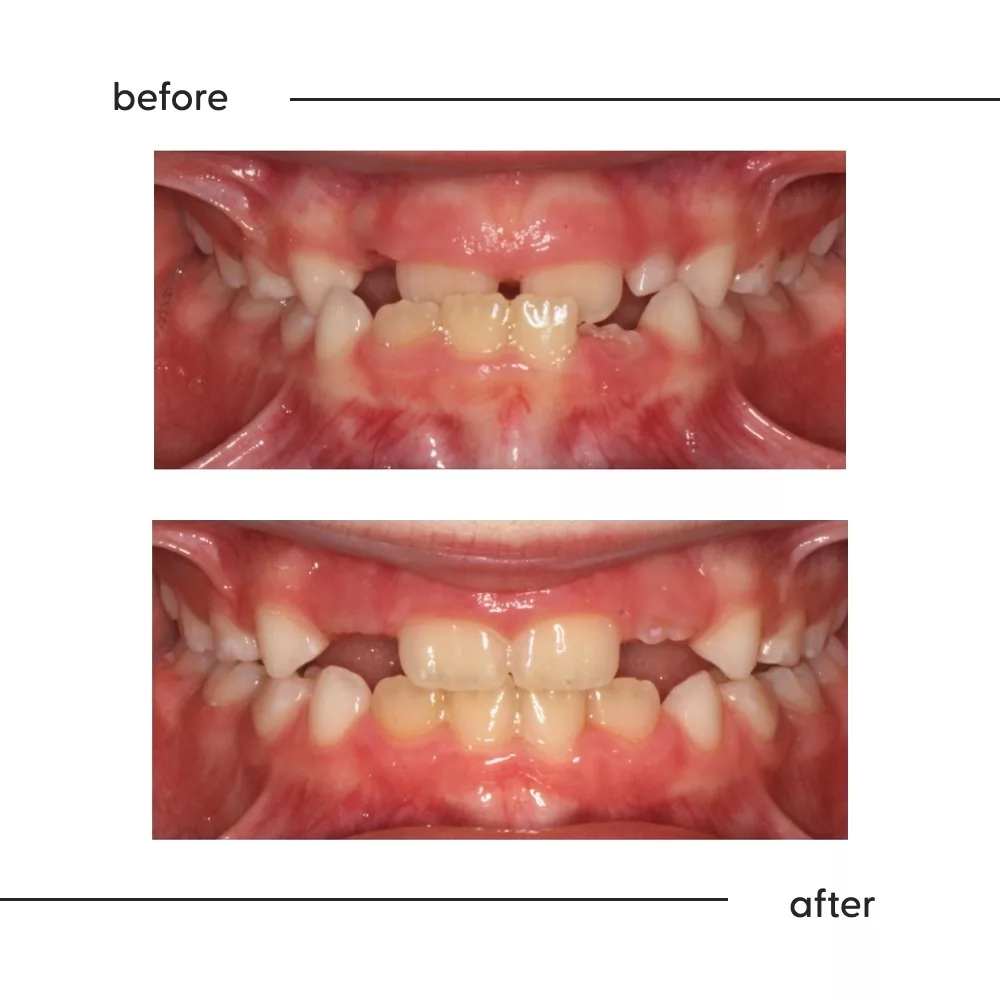
Real young Milk Orthodontics patients, treated by a specialist and shared with their permission.
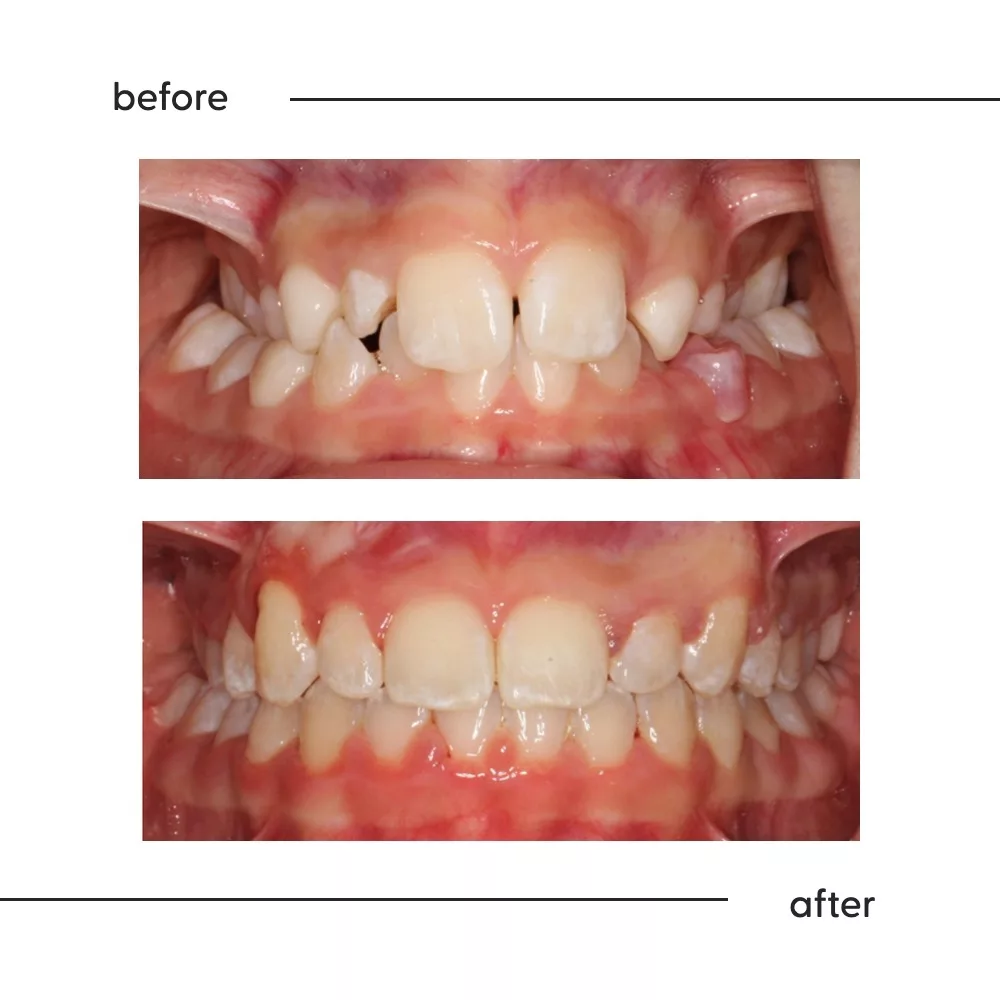
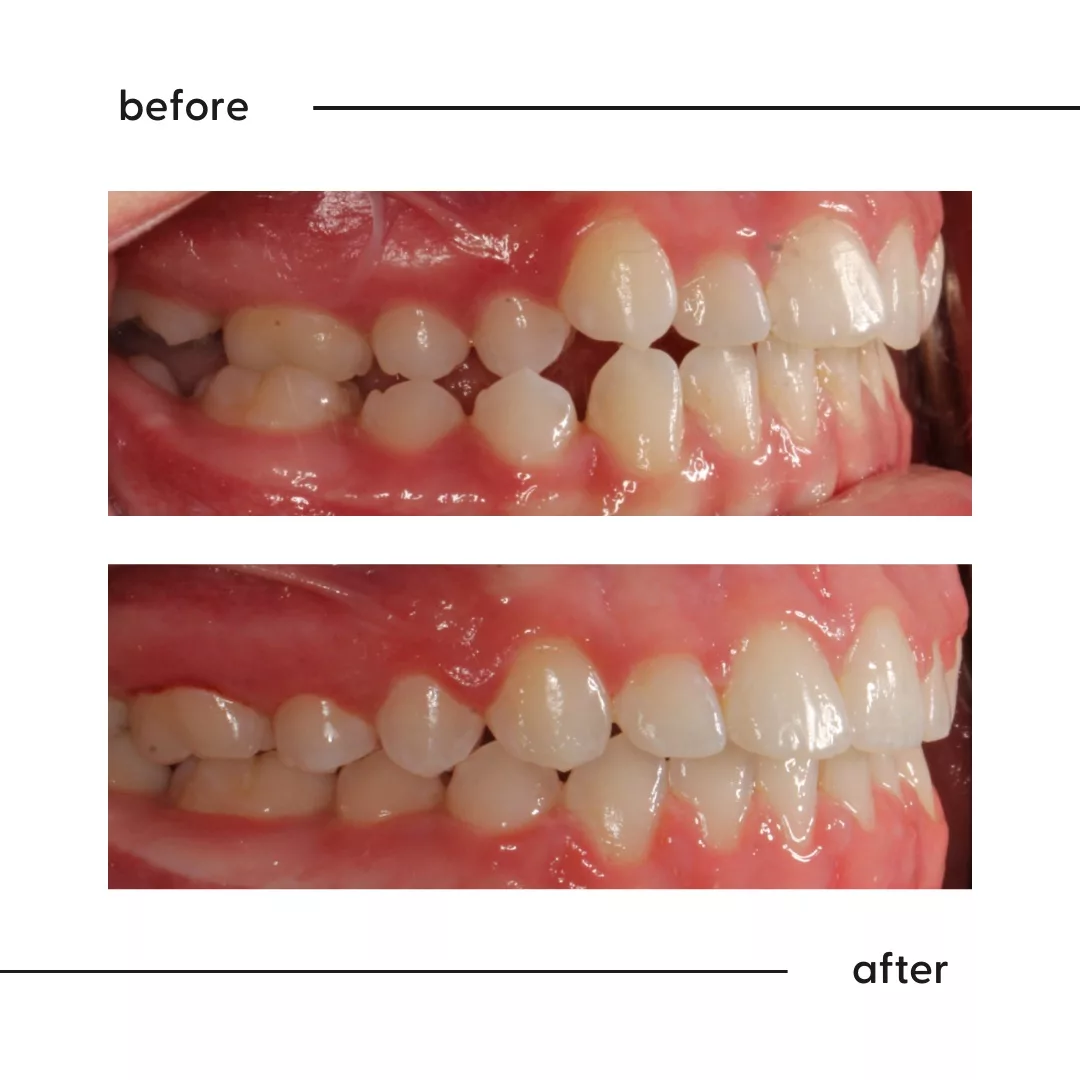
More on how we treat a crossbite, all the conditions we treat and more before and after results.
What it costs, and what is free
The first visit is a free Smile Assessment. Early treatment, such as an expander or correcting a single front tooth, starts from $4,500. Comprehensive braces or aligners for children and teens are from $9,900 all-inclusive, most cases around $10,400. Interest-free plans spread the cost over treatment, and there is a family discount for siblings.
Answered honestly
What is a crossbite?
When some upper teeth bite inside the lower teeth instead of just outside them. A front crossbite is an upper front tooth behind a lower one. A back crossbite is the upper back teeth sitting inside the lower ones on one side or both, usually because the upper jaw is a little narrow.
How do I tell if my child has a crossbite?
Ask your child to bite the back teeth together and lift the lip at the side. The upper teeth should sit just outside the lower ones. If they sit inside, or an upper front tooth sits behind a lower one, or the jaw swings to one side as the teeth meet, that is worth a free specialist look.
Why does my child's jaw shift to one side when they bite?
Because the teeth do not fit together straight, the lower jaw slides sideways to find a comfortable bite. That is the sign we most want to see early, because a growing jaw can follow the slide and end up off centre. Corrected early, the jaw closes and grows straight.
What causes a crossbite in children?
A narrow upper jaw is the usual cause of a back crossbite, sometimes from long thumb or dummy sucking or from breathing through the mouth. A front crossbite usually comes from a tooth that was short of room and came through behind the others. Both often run in families.
At what age should a crossbite be treated?
Sooner than most things. A front tooth is corrected soon after it comes through, and a narrow upper jaw is widened between about 6 and 10, when the join in the upper jaw is still soft. The first look is free, and if it can wait we say so.
Will my child grow out of a crossbite?
Usually not. A single front tooth occasionally settles as the bite develops, but a back crossbite with a jaw slide does not correct itself and can steer how the jaw grows. That is why we prefer to correct it while a child is small.
How is a crossbite treated in a child?
A front tooth is moved forward with a small removable plate or a short spell of braces on the front teeth, usually in a few months. A narrow upper jaw is widened with a palatal expander, turned a little each day and worn for 6 to 9 months. Braces or aligners later finish the bite if needed.
How much does crossbite treatment cost for a child in NZ?
At Milk, early treatment such as an expander or correcting a single front tooth starts from $4,500. Comprehensive braces or aligners for children and teens are from $9,900 all-inclusive, most cases around $10,400. The Smile Assessment is free, and the written plan with an exact quote follows the $390 New Patient Consultation.
Teeth biting inside, or a jaw that slides? See us early
A free 20 minute Smile Assessment with our Treatment Coordinator at Newmarket or Albany. No referral, no obligation, and if the answer is wait, we will say so.
More self checks: does my child have an underbite, does my child have an overbite, does my child have buck teeth and does my child have an open bite. Or start with the ten signs your child may need braces.