
Snoring or mouth breathing? When the jaw is part of it
A child who snores most nights or breathes through the mouth all day is worth a proper look, and the first stop is your GP, not us. Most of the time the cause is in the nose or the throat: adenoids, tonsils, allergies. But a narrow upper jaw makes the nose narrow too, and that is the part an orthodontist can change while a child is still growing. Here is how to check at home, who to see in what order, and where widening the jaw genuinely helps.
Free first step, no referral needed. Choose Newmarket or Albany and switch at any time.
Reviewed by Dr Shaz MacAvoy, Specialist Orthodontist. Doctor of Clinical Dentistry (Orthodontics), registered with the Dental Council of New Zealand.
Three reasons a child snores or breathes through the mouth
They often overlap, which is why more than one kind of specialist can be involved.
Enlarged adenoids and tonsils
The most common cause of snoring and mouth breathing in children, and the first thing your GP checks. Where they are large enough to block the airway, an ear nose and throat specialist may recommend removing them, which is the standard first treatment for sleep-disordered breathing in children.
A blocked nose
Allergies, a persistent cold or a narrow nasal passage make breathing through the nose hard work, so a child stops trying. Treating the nose often ends the habit. Some children keep breathing through the mouth after the blockage has cleared and need a nudge back.
A narrow upper jaw
The upper jaw forms the floor of the nose. A narrow one means a narrow nose, a high palate, and often a crossbite or crowding. This is the part an orthodontist treats, and it is easiest to change while a child is still growing.
A two minute check at home
One look at night, one in the day, and a look at the teeth.
Snoring most nights, pauses or gasps go to your GP first. A narrow arch, a crossbite or front teeth that do not meet come to us. Both at once is common, and we would rather you book both than wait.
Six signs worth acting on
None of these is an emergency. All of them are easier to sort out in a child than in a teenager.
Snoring most nights
Regular snoring is the sign doctors act on. It can mean the airway is narrowed during sleep. Your GP is the first stop, and the earlier the better.
Pauses, gasps or very restless sleep
Breathing that stops and restarts, or a child who thrashes, sweats or sleeps sitting up, needs a medical assessment soon. Tell your GP exactly what you saw.
Lips apart all day
A mouth that never closes is a habit the face grows around. Lips that rest together are the goal, and finding out why they do not is the first step.
A narrow arch or a crossbite
The orthodontic part. A narrow upper jaw is widened with an expander, which makes room for the teeth and for the nose at the same time. Read the crossbite self check.
Front teeth that do not meet
An open bite often goes with a tongue that sits low and a mouth that stays open. Breathing, habits and the bite are treated together, not one at a time.
Tired, grumpy or struggling at school
Poor sleep shows up in the day as attention, mood and growth. If it is going with any of the signs above, say so to your GP: it changes how quickly things move.
Who to see, in what order
Breathing is medical. The jaw is ours. The two plans should fit together.
1. Your GP
Checks tonsils, adenoids and the nose, asks about sleep, and refers on where needed. Take a video of your child asleep on your phone. It tells the doctor more than a description.
2. Ear nose and throat, or a sleep service
Where the adenoids or tonsils are large, removing them is the standard treatment for children who snore and stop breathing. A sleep study is arranged when the picture is unclear.
3. The orthodontist, for the jaw and the bite
Where the upper jaw is narrow, an expander widens it while the child is growing. We coordinate with your GP and ENT so the plans line up. The first visit is a free Smile Assessment.
More on how an expander works, what it costs and the best age on our palatal expander page, and on thumb sucking, which often travels with a narrow jaw.
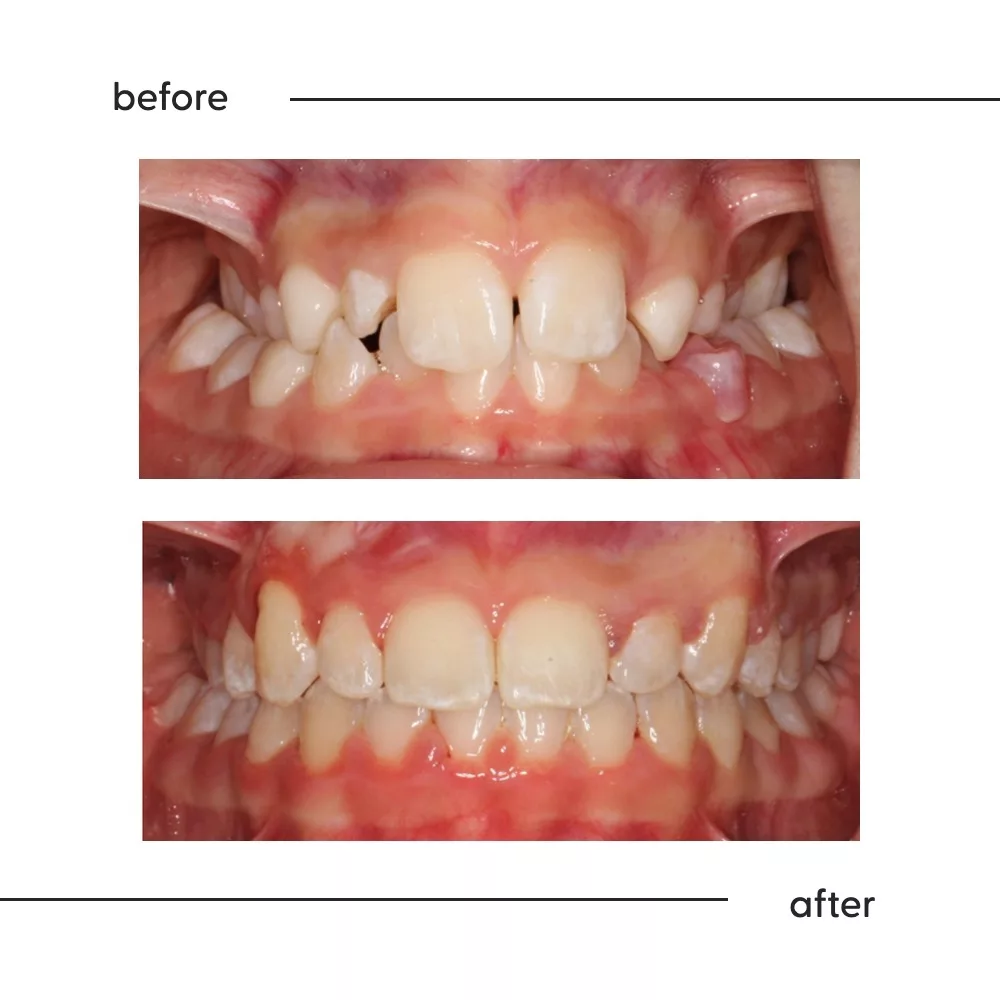
What widening a narrow upper jaw looks like
Real young Milk Orthodontics patients, treated by a specialist and shared with their permission.
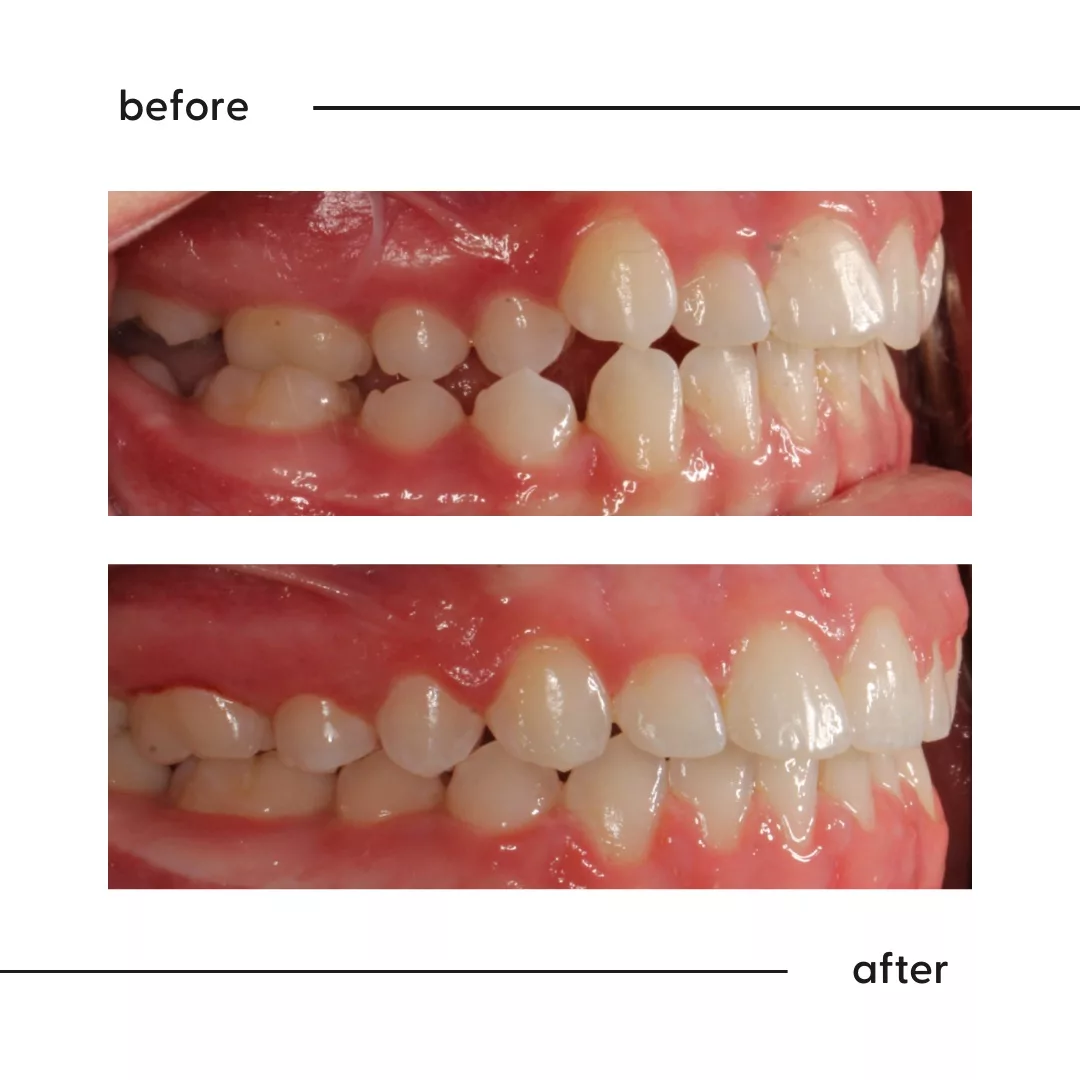
See all the conditions we treat and more before and after results.
What it costs, and what is free
The first visit is a free Smile Assessment. Early treatment with an expander starts from $4,500 all-inclusive. If braces are likely later, both phases are quoted together in writing at the $390 New Patient Consultation. Interest-free plans spread the cost over treatment, and there is a family discount for siblings.
Answered honestly
Is it normal for a child to snore?
An occasional snore with a cold is normal. Snoring most nights, loud snoring, pauses in breathing, gasping, restless sleep or a child who is tired and grumpy in the day are not, and they are worth a visit to your GP. Around one child in ten snores regularly, and a smaller number have sleep-disordered breathing that needs treatment.
Why does my child breathe through their mouth?
Most often because the nose is blocked: enlarged adenoids or tonsils, allergies or a persistent cold. A narrow upper jaw makes the nasal passages narrower too, so the two often go together. Sometimes it is simply a habit that stayed after the blockage cleared.
Can an orthodontist fix snoring?
Not on their own, and we will not claim to. Snoring and sleep-disordered breathing in children are assessed by your GP, an ear nose and throat specialist or a paediatric sleep service. Where a narrow upper jaw is part of the picture, widening it with an expander makes more room in the nose and the mouth, and that can help as part of the team's plan.
Does a palatal expander help breathing?
It can, in the right child. The upper jaw forms the floor of the nose, so widening it widens the nasal passages as well as the arch. Studies show better nasal airflow in children with a narrow upper jaw after expansion. It is not a cure for sleep apnoea, and it is done for the bite and the arch first, with breathing as a welcome extra.
Does mouth breathing change a child's face?
Over years it can. A mouth that is always open tends to go with a longer lower face, a narrow upper jaw, a high palate and front teeth that do not meet. That is why we like to hear about mouth breathing early, while growth can still be guided and the cause can be treated.
Who should I see first?
Your GP. They check the tonsils, adenoids and nose, and can refer to an ear nose and throat specialist or a sleep service. See us for the jaw and the bite, ideally around the same time so the two plans fit together. The first orthodontic visit is a free Smile Assessment.
At what age should a child be checked for this?
As soon as you notice it. For the jaw, the useful window is early: an expander does its best work between about 6 and 10, while the join in the upper jaw is still soft. Most children we see for breathing questions are not treated straight away, but we want to see every one.
What does early treatment for a narrow upper jaw cost?
At Milk, early treatment with an expander starts from $4,500 all-inclusive. The Smile Assessment is free, and the written plan with an exact quote follows the $390 New Patient Consultation with Dr Shaz. If braces are likely later, both phases are quoted together at the start.
Narrow jaw, open mouth? Let us look at the jaw while your GP looks at the rest
A free 20 minute Smile Assessment with our Treatment Coordinator at Newmarket or Albany. No referral, no obligation, and if the answer is wait, we will say so.
More self checks: does my child have a crossbite, an overbite, buck teeth and an underbite. Or start with the ten signs your child may need braces.