
Does my child need braces?
Only a specialist check can say for sure, and often the honest answer is not yet. But some things you can see at home are worth a look, and the earlier a specialist sees them, the simpler they tend to be to fix. Below are the ten signs we would want to know about, and a two minute self check. If you tick even one, the first visit is free.
Specialist orthodontist · No referral needed · Newmarket and Albany
Reviewed by Dr Shaz MacAvoy, Specialist Orthodontist. Doctor of Clinical Dentistry (Orthodontics), registered with the Dental Council of New Zealand.
Ten signs your child may need braces
Look at your child's teeth with the mouth closed in a natural bite, then smiling. Any of these is worth a check.
1. Crooked or crowded teeth coming through
Adult teeth twisting, overlapping or coming through behind the baby teeth. Mild crowding at 7 to 9 is common. Crowding that is clearly getting worse is the sign to act on.
2. Front teeth that stick out
Upper front teeth well ahead of the lower ones, sometimes called buck teeth or an overjet. These teeth are more at risk of being knocked and chipped, so we like to see them early. Buck teeth self check.
3. Lower teeth in front of the upper teeth
The lower front teeth sitting ahead of the upper ones when the mouth is closed, an underbite. This responds best to early guidance while the jaws are still growing. Underbite self check.
4. Teeth biting inside each other
An upper tooth biting behind a lower tooth, or upper back teeth sitting inside the lower ones. A crossbite can push the jaw to one side as it grows and is one of the clearest reasons for early treatment. Crossbite self check.
5. Gaps that are not closing
Small gaps between the new front teeth usually close on their own. A large gap, or spacing across the whole arch, can mean a missing adult tooth or a tooth stuck in the wrong place.
6. Baby teeth lost very early or very late
Losing baby teeth years before friends do, or still having them well into the teens, changes how the adult teeth come through and where they end up.
7. Thumb, finger or dummy sucking past age 5
A habit that continues once the adult teeth arrive can push the front teeth forward and open the bite. Stopping the habit early often lets things settle on their own. Open bite self check.
8. Mouth breathing or lips that do not close at rest
Breathing through the mouth, snoring, or lips that sit apart can go with a narrow upper jaw. A specialist can tell you whether the jaw shape is playing a part. Snoring and mouth breathing guide.
9. A jaw that shifts, clicks or sits to one side
Watch your child close their teeth together. A slide to one side, or a chin that looks off centre, is worth a look while growth can still be guided.
10. Trouble biting, chewing or speaking
Front teeth that cannot meet to bite into food, chewing on one side only, or a lisp that does not fade can all come from the way the teeth and jaws fit together.
A two minute self check
Ask your child to bite their back teeth together and lift their lips. Then ask them to smile. Tick anything you notice.
One tick is enough to book a free look. No ticks and your child is 7 or older? A first check is still worthwhile, because whether the adult teeth have room only shows on an X-ray. Read when a child should first see an orthodontist.
Crooked front teeth, and the right age
The three questions parents ask us most.
My child's front teeth are coming in crooked
Often normal between about 7 and 9. The new adult front teeth can look large, gappy or a little crooked while the face catches up, and much of it settles. Crowding that is clearly getting worse, or a tooth coming through in the wrong place, is the version worth a look now.
Should a 12 year old get braces?
Twelve is right in the classic window. Most adult teeth are through and the jaws are still growing, so treatment tends to be quicker and the result more stable. Whether your 12 year old actually needs braces depends on the bite and the crowding.
Is 15 too late for braces?
No. Growth is slowing, so we rely more on moving the teeth than guiding the jaws, but braces and clear aligners work well right through the teens and into adulthood. Older teens often choose clear braces or aligners.
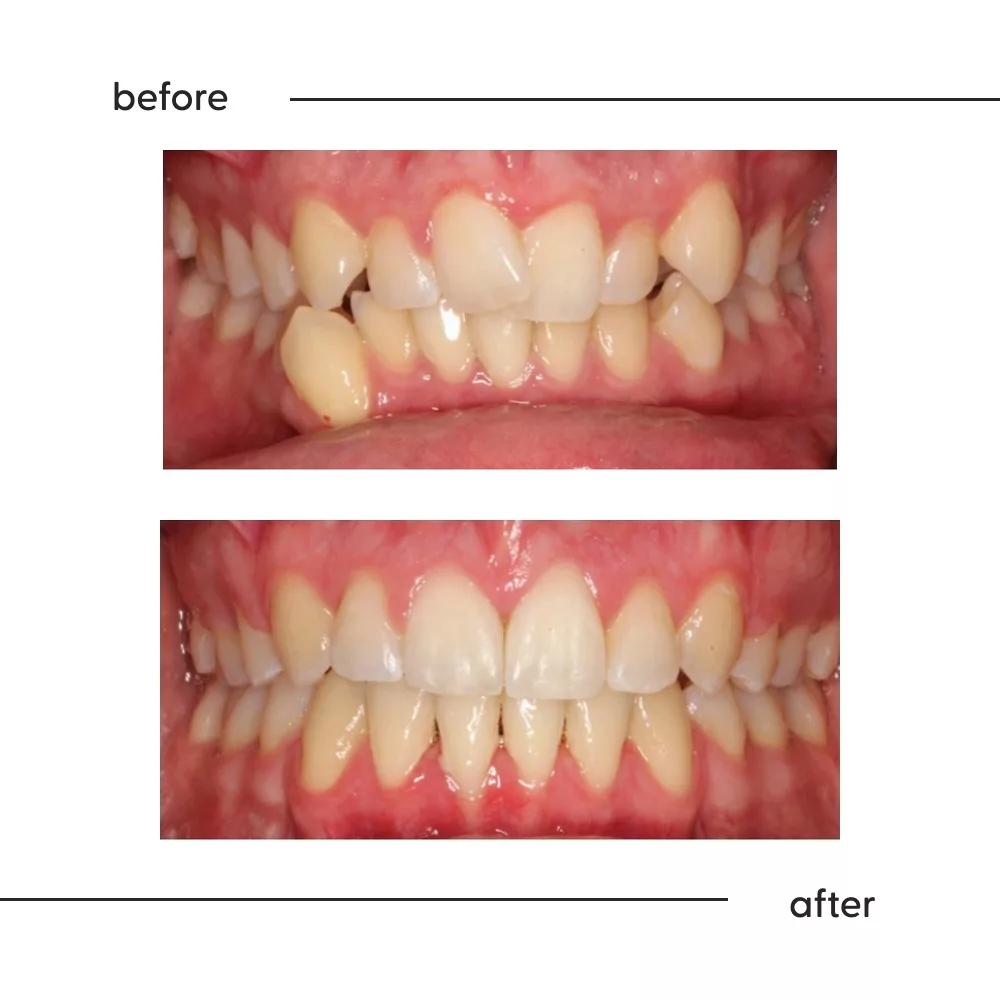
What these signs look like when treated
Real young Milk Orthodontics patients, treated by a specialist and shared with their permission.
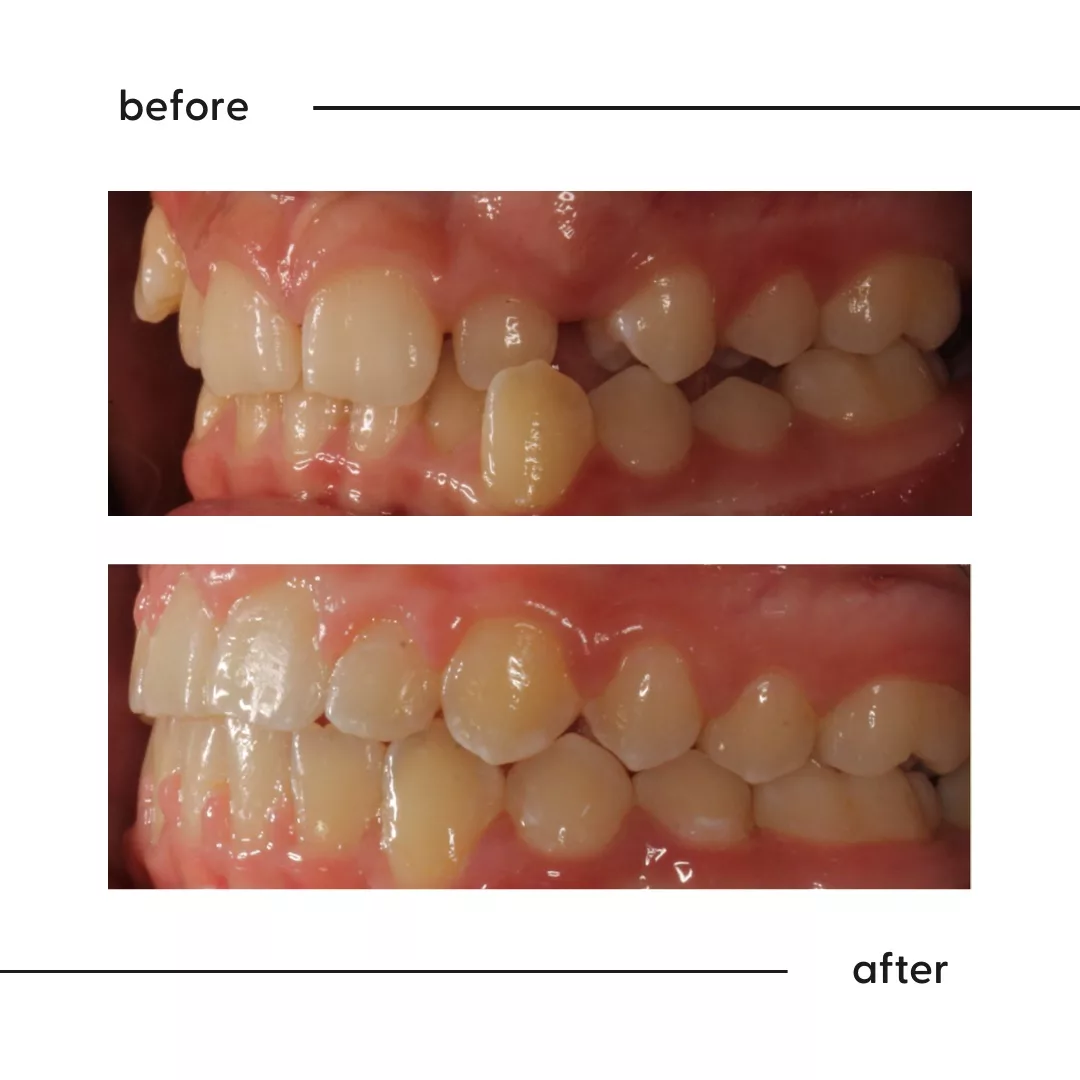
See all the conditions we treat and more before and after results.
What it costs, and what is free
The first visit is a free Smile Assessment. If treatment is worthwhile, comprehensive braces or aligners for children and teens are from $9,900 all-inclusive, most cases around $10,400, and early treatment starts from $4,500. Interest-free plans spread the cost over treatment, and there is a family discount for siblings.
Answered honestly
Is there a quiz to tell if my child needs braces?
The self check on this page is the closest honest version. If you tick any of the ten signs, a free Smile Assessment is worthwhile. No online quiz can see how the jaws are growing or whether the adult teeth have room, which is why the check with a specialist is free.
My child's front teeth are coming in crooked. Is that normal?
Often, yes. Between about 7 and 9 the new adult front teeth can look large, gappy or a little crooked while the face catches up. Much of it settles on its own. Crowding that is clearly getting worse, a front tooth biting behind the lower teeth, or a tooth coming through in the wrong place are the versions worth a look now.
Should a 12 year old get braces?
Twelve is right in the classic window. Most of the adult teeth are through and the jaws are still growing, so treatment tends to be quicker and the result more stable. Whether your 12 year old actually needs braces depends on the bite and the crowding, which a free assessment will tell you.
Is 15 too late for braces?
No. Fifteen is still a good age. Growth is slowing, so we rely more on moving the teeth than guiding the jaws, but braces and clear aligners work well right through the teens and into adulthood. Older teens often prefer clear braces or aligners and both are available.
What if my child has none of these signs?
That is good news, and a first check around age 7 to 8 is still worth it. Some things, such as adult teeth without room to come through, only show on an X-ray. Most children we see at that age are simply checked again in a year, at no charge.
Will the dentist tell me if my child needs braces?
Many dentists will mention crowding or a bite they think is worth a specialist opinion, and that is a good prompt. Dentists do not usually carry out a full orthodontic assessment, and you do not need a referral to see us. If you are wondering, you can simply book.
Can early treatment mean my child avoids braces later?
Sometimes it makes later treatment shorter or simpler, and occasionally it avoids it. Early treatment is for specific problems, such as a crossbite or a narrow upper jaw, not for straightening every tooth. We only recommend it when it clearly helps, and we quote both phases together if both are likely.
How much do braces cost for a child?
Comprehensive braces or aligners for children and teens are from $9,900 all-inclusive, with most cases around $10,400. Early treatment starts from $4,500. Interest-free plans spread the cost over treatment. You get an exact written quote after the specialist consultation.
Ticked something? Let us take a look
A free 20 minute Smile Assessment at Newmarket or Albany. No referral, no obligation, and if the answer is wait, we will say so.